Why Repetition Needs a Clear Target in Skill Practice
Why repetition needs a clear target: learn to choose one visible movement feature, organise practice around it and decide when to adjust your focus.
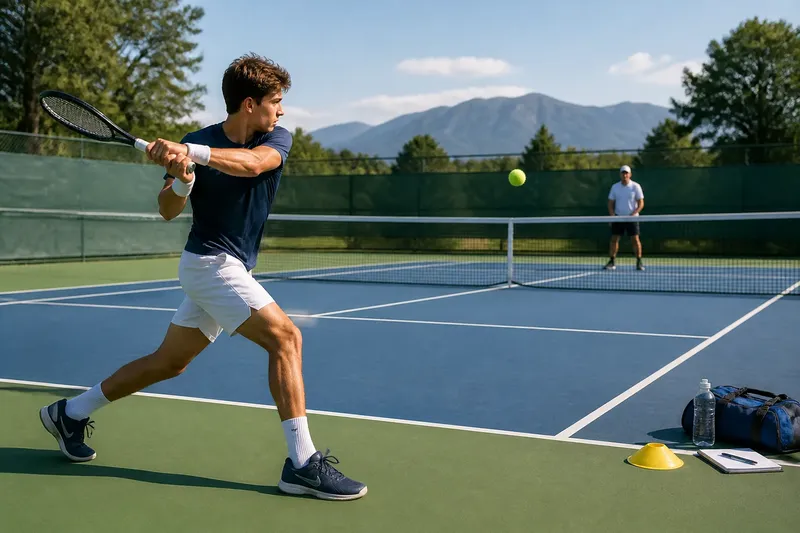
A tennis player can hit forehands for an entire session and still leave unsure what changed. Repetition needs a clear target: one observable feature of the movement that gives each attempt something specific to notice. That focus makes practice easier to review without turning every shot into a verdict on talent.
What makes a useful practice target?
A useful target describes something a player can see or feel during the action, not a vague outcome such as “play better”. It might be the racket face pointing towards a chosen part of the court at contact, the landing position of a foot, or the timing of a release.
Keep the target narrow enough to notice while moving. “Use better technique” asks the brain to monitor too much; “finish with the racket travelling across the body” gives attention a distinct cue. The cue should matter to the skill, but it need not explain the whole movement.
Choose a feature that can be observed reliably. A teammate or coach may watch it from a safe, useful position, while the athlete can use a permitted video view or a simple marker on the ground. The aim is not to collect elaborate data; it is to make the chosen feature easier to recognise.
How can you plan a week around one cue?
A weekly routine can preserve a single focus while letting practice conditions change. The following plan suits a developing tennis player working on forehands, but the same structure can be adapted to a throw, pass or other movement. Keep normal coaching and recovery arrangements in place, and use the cue only where it fits the session.
- Monday — choose and describe. Ask the coach what part of the forehand is most useful to focus on now. Write the cue in plain language, such as “racket travels towards the far-side target after contact”, and agree how an observer will recognise it.
- Tuesday — rehearse at a manageable pace. Practise the movement with a coach feeding comfortable balls. Pause occasionally to name what the racket did, rather than trying to correct several body parts at once. If the cue is hard to notice, make the feed simpler or clarify the wording.
- Wednesday — rest or take the planned recovery session. Do not turn a rest day into a hidden extra practice. A short mental rehearsal may help some athletes recall the cue, but it should not replace the recovery the training plan calls for.
- Thursday — keep the cue, vary the feed. Use balls arriving at different but manageable positions. Notice whether the same racket path is visible when the player moves to meet the ball. If the movement becomes rushed, reduce the challenge rather than adding another technical instruction.
- Friday — observe without constant interruption. Have a partner watch a brief set of rallies and note when the cue is visible. Discuss the pattern afterwards. This lets the player connect the target with ordinary play instead of stopping after every attempt.
- Saturday — review and decide. Look at the notes or a short permitted video clip with the coach. Keep the cue if it remains useful and understandable; refine its wording or choose a different feature if it no longer helps attention.
- Sunday — leave space. Follow the athlete’s usual rest or light activity plan. Do not judge the week by how many times the cue appeared; consider whether the player can recognise it and carry it into practice.
This is a flexible template, not a demand to train on every listed day. A team timetable may combine or move sessions. The important thread is that the cue is chosen deliberately, revisited in different settings and reviewed before it is changed.
How do you tell whether the target is working?
Look for a clearer observation, not instant perfection. The athlete should be able to say what happened on an attempt: “The racket finished across my body,” or “I lost the finish when I reached wide.” That description is more useful than “good” or “bad” because it points to something that can guide the next decision.
Also watch whether the cue survives a modest change in practice. A target that appears only during slow feeds may be too dependent on the drill. A target that remains visible in a cooperative rally may be ready for more demanding practice, subject to the coach’s judgement.
Say you are helping a fictional player who rushes the forehand when a ball comes towards the sideline. The agreed target is a balanced finish after contact. The coach first feeds balls at a comfortable pace; later, the feed moves wider. If the player can still finish under control on some wider balls, that is an observable sign to discuss. If the finish disappears, return to an easier feed and keep the same cue rather than adding multiple corrections.
What should you do when the cue stops helping?
A cue can become unhelpful for several reasons. It may be too broad, too difficult to notice at speed, or no longer the most relevant part of the movement. It can also crowd out attention to the ball or the playing situation. Treat that as information about the practice focus, not a reason to blame the athlete.
Use a brief review with the coach or training partner. Ask whether the cue is visible, whether it connects to the skill being practised, and whether the player can attend to it without losing awareness of the task. If the answer is unclear, simplify the drill or choose a more observable feature. Avoid issuing a string of corrections; one replacement cue is easier to remember.
For a new movement or a persistent technical concern, a qualified coach can help identify an appropriate feature. Where pain or injury is involved, stop treating the issue as a practice-cue problem and seek advice from a suitable health professional.
Which questions help you choose a target?
Should the target describe a result or a movement?
For this kind of practice, choose a movement feature the player can notice during the action. A result such as landing the ball in a corner may depend on several factors, while a cue such as the direction of the racket after contact offers a more specific observation.
How many cues should you use at once?
Begin with one. Adding several instructions can split attention and make it difficult to tell which feature changed. A coach may introduce another cue later, once the first is understood or no longer addresses the current need.
Can a teammate help observe the movement?
Yes, if the teammate knows exactly what to watch and can do so without disrupting practice or creating a hazard. Agree on a simple description beforehand; “balanced finish” is more useful than a general judgement about whether the shot looked good.
When should you change the target?
Change it when the feature is consistently easy to recognise, no longer relevant, or too difficult to attend to in the current drill. Review the decision with a coach rather than changing cues after each imperfect attempt.
How does a target make repetition more useful?
Repetition becomes more purposeful when an athlete knows what to notice and can describe what happened. A clear target does not promise a particular result, and it does not replace coaching or sound session planning. It gives attention a small, workable job while the larger movement is repeated.
Keep the cue in plain language, make it observable, and return to it across a sensible stretch of practice before deciding whether it still fits. That is the practical value of why repetition needs a clear target: each attempt can inform the next one, even when the movement is not yet consistent.