From Amateur Clubs to the Modern Olympic Ideal
Amateur clubs and the modern Olympic ideal: see how club customs shaped sporting identity, and why fair access matters beyond an athlete’s pay status.
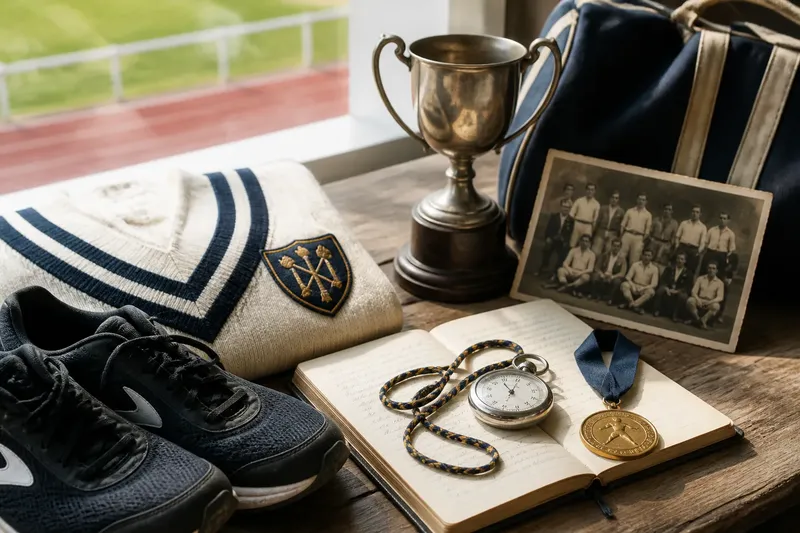
Amateur clubs helped make organised sport a shared civic activity, but their ideals did not mean the same thing to every athlete. The history of amateur clubs and the modern Olympic ideal is less a straight passage from unpaid competition to professional sport than a debate over who could compete, what support was acceptable and which values sport should uphold.
What did “amateur” mean in a club?
An amateur was broadly understood as someone who took part for interest rather than as a paid occupation. In practice, the label also carried social expectations: a club could present members as playing for enjoyment, fellowship and honour, even when their time, equipment or travel depended on private resources.
As clubs arranged fixtures, maintained grounds and adopted common rules, amateurism offered a way to describe formal competition as recreation and character-building rather than work. But access to leisure was uneven. A person with independent means could train and travel without wages, while someone dependent on paid work might need help to meet the same demands.
How did clubs shape amateur sporting culture?
Clubs gave the amateur ideal a local home. Members shared facilities, wore common colours and represented a group beyond themselves. Club customs could teach newcomers to accept a referee’s decision, respect opponents and treat victory as meaningful without making it the only purpose of play.
Those habits gave amateur sport a public language of fellowship and self-control. Yet clubs also acted as gatekeepers: fees, membership rules and informal expectations influenced who could participate and represent the group. The image of the independent gentleman amateur was prominent in some settings, but it was not a universal description of sporting life.
Why did amateurism enter the Olympic ideal?
The modern Olympic movement drew on an aspiration that international competition could encourage disciplined contests between nations while remaining distinct from commercial entertainment. Amateurism fitted that aspiration by presenting athletes as competitors for honour, fellowship and the challenge of the event, rather than as people earning a living from performance.
The label described an ideal as well as an eligibility boundary. Olympic organisers and sporting bodies used it to express which competitors they considered suitable representatives of the movement. But there was no single, timeless definition shared across every sport: governing bodies set and revised their own rules about payments and assistance.
Who could amateur rules exclude?
Rules could distinguish payment for competing from help with travel, coaching, equipment or time away from work. The boundaries varied, and even apparently neutral rules could place a heavier burden on athletes who relied on wages than on those able to cover costs themselves.
Say a club runner on shift work is invited to a championship but cannot afford to miss a day’s wages. The runner checks the relevant eligibility rule and sees that compensation for lost work is not allowed, while a rival with savings can travel without seeking payment. If the runner stays home, the observable outcome is that the rule preserves the same formal standard for both athletes but prevents only the wage-dependent runner from competing.
How did Olympic eligibility change?
There was no single moment when the Olympics moved from amateur-only competition to professional participation. The International Olympic Committee’s amateur eligibility requirements were removed from the Olympic Charter in 1974, but that change did not immediately make every professional eligible in every sport. International federations continued to set sport-specific rules, and Olympic participation opened to professionals at different times and under different conditions.
For example, the International Tennis Federation allowed professional players to compete at the 1988 Seoul Olympics, while professional basketball players were admitted at the 1992 Barcelona Games. These cases show why the change is better described as gradual and sport-specific than as a blanket decision that took effect everywhere at once.
The shift changed the emphasis rather than erasing every older concern. Amateur status no longer served as the general Olympic boundary, while debates about fair access, commercial influence, respect for opponents and the costs of preparation continued in new forms.
Which questions clarify the amateur legacy?
Was an amateur always unpaid?
Not necessarily: the meaning depended on rules about which payments or forms of assistance counted as acceptable. Because those rules differed between sports and governing bodies, the label did not describe every athlete’s finances in a uniform way.
Why did Olympic organisers value amateurism?
It expressed an aspiration that competition should involve honour, discipline and international fellowship rather than simply commercial reward. It also helped organisers define which athletes they regarded as representing that ideal.
Did amateur rules affect athletes equally?
No. People with savings or flexible work could often absorb participation costs more easily than those who depended on wages. A rule might apply to everyone on paper while restricting some athletes more than others in practice.
Does the amateur ideal still matter?
Amateur status is no longer the general Olympic eligibility rule, but its legacy remains in arguments about fair competition, commercial influence and the purpose of sport. Those debates can be considered without assuming that unpaid participation alone makes a contest fair.
What remains of amateur participation?
Amateur clubs still give people a place to compete without making sport their occupation. Their value need not depend on restoring old social hierarchies or pretending that organised participation requires no resources. Clubs can honour voluntary commitment while recognising that members bring different circumstances.
The lasting point in the history of amateur clubs and the modern Olympic ideal is that sporting values are tested by the rules people actually face. When a club or governing body discusses fairness, it should ask not only whether the same rule applies to everyone, but also whether athletes with different work and financial circumstances have a genuine chance to take part.