The Confidence Myth: Why Doubt Is Not Proof You Are Unprepared
The confidence myth says doubt means you are unprepared. Learn how athletes can judge readiness by evidence and choose a useful next task.
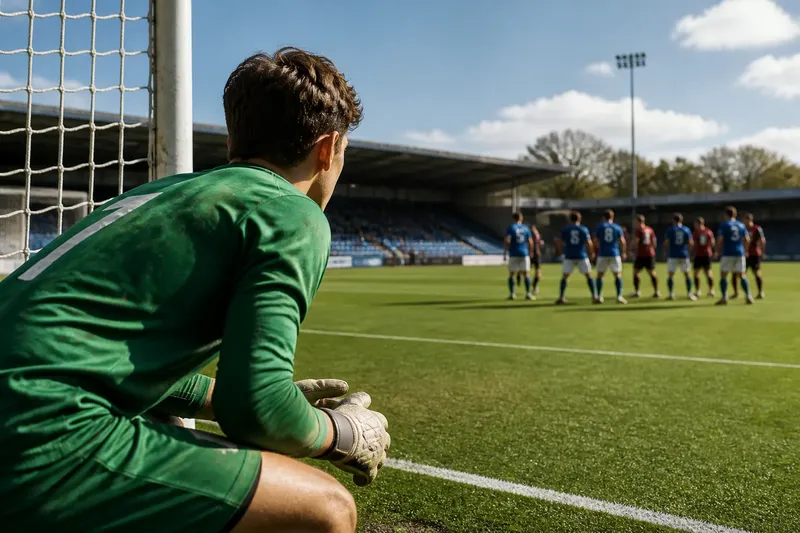
A player can feel uncertain before a match and still be ready to make the first pass. The confidence myth—that capable athletes must feel certain—confuses an emotion with evidence. Doubt may signal pressure, unfamiliarity or the importance of the occasion; by itself, it cannot tell you whether your preparation is adequate.
Instead of waiting to feel fearless, an athlete can ask a narrower question: what is the next task I can carry out? That shift does not dismiss doubt. It gives attention a practical place to go while leaving room to assess genuine gaps in preparation.
Why can doubt show up when you are prepared?
Confidence is a feeling of trust in your ability or likely performance. Readiness is more concrete: it concerns whether you have practised the relevant skills, understand your role and can respond to the demands in front of you. The two can overlap, but they do not have to arrive together.
A familiar routine can feel different under competition pressure. A basketball player may know the defensive call but worry about making a mistake in front of the team. That worry is real, yet it does not erase the player’s knowledge of the call or their ability to listen for it.
Doubt can also become more noticeable when the task matters. Before a race, a runner may wonder whether they can hold their planned pace. The question may reflect uncertainty about the outcome rather than a lack of practice. Distinguishing those possibilities helps prevent a passing feeling from becoming a sweeping verdict about ability.
What can you use instead of certainty?
Use observable signs tied to the task. Can you describe your role? Have you practised the key action under conditions that resemble the challenge? Do you know what cue or instruction should guide your first decision? These checks are more informative than trying to decide whether you feel confident enough.
They are not a demand for perfect preparation. They help separate a specific, fixable gap from a general fear. If you cannot recall a play call, the next useful action may be to ask your coach to clarify it. If you know the call but fear making an error, the next action may be to focus on hearing it and responding.
Think of doubt as a dashboard light, not a verdict. It can prompt a check, but it does not tell you on its own what is wrong. Look for the concrete information that would explain it before changing your plan.
Which response suits the doubt you have?
There are three useful responses: prepare a missing detail, return attention to a familiar cue, or make room for uncertainty while acting. The right choice depends on what the doubt points to. Treating every uneasy feeling as a reason to practise more can waste attention; treating every concern as harmless can leave a real gap unaddressed.
When should you prepare a missing detail?
Choose this response when you can name something specific you do not know or have not practised, such as your position on a set play. Ask the relevant coach or teammate for clarification, then rehearse the detail in a suitable setting. Where appropriate, follow the coach’s guidance rather than inventing a new routine under pressure.
When should you return to a familiar cue?
Use a cue when you understand the task but your attention has drifted towards consequences. A tennis player who knows the return plan might focus on watching the opponent’s toss rather than replaying a feared double fault. The cue brings attention back to information needed for the next action.
When is it useful to act without feeling sure?
If you have checked the relevant preparation and no concrete gap remains, uncertainty may simply be present. You can acknowledge it and begin with a task you control, such as taking your position or listening for the call. This is not a claim that the outcome will go your way; it is a choice to act on available information instead of waiting for a particular mood.
How do you choose the next task?
Say you are an invented club goalkeeper before a match and feel unsure about facing a corner. You review the team’s agreed call and realise you do not know who is meant to take the near-post position. Asking the captain to clarify that role addresses a real information gap; afterwards, your next task can be to take your position and listen for the call. The expected observable result is clear role information, not the disappearance of nerves.
For your own situation, make the next task small enough to carry out and relevant to the performance. “Play brilliantly” is neither specific nor directly controllable. “Check the runner before the restart” gives attention a concrete job. A useful task should clarify what to do next, not promise a particular result.
- Name the doubt: Is it about a skill, a decision, a role or the outcome?
- Check for evidence: Identify what you know, have practised or need clarified.
- Choose one action: Ask a question, use a familiar cue or begin the agreed task.
- Review afterwards: Note what happened and what you would change next time, without treating one performance as a complete judgement of your ability.
This comparison keeps preparation and emotion in their proper places. A missing detail calls for clarification; a wandering mind may benefit from a cue; uncertainty without a specific gap may call for action. No option is a test of character, and none requires you to pretend that you feel calm.
What should you remember about confidence and doubt?
Confidence can be welcome, but it is not a compulsory entry condition for performance. Doubt is a reason to look more closely, not proof that you are unprepared. When it appears, the confidence myth becomes less persuasive if you ask what the feeling actually tells you about the task.
For athletes working with the confidence myth, the practical question is not “How do I make doubt disappear?” but “What information or action would help now?” Sometimes that means filling a genuine gap. Sometimes it means returning to a well-understood cue and letting the feeling travel with you while you do the next useful thing.