A First Team Tryout: What to Notice Beyond the Score
A first team tryout is easier to understand when you watch communication, role changes and shared decisions, not just the score or standout moments.
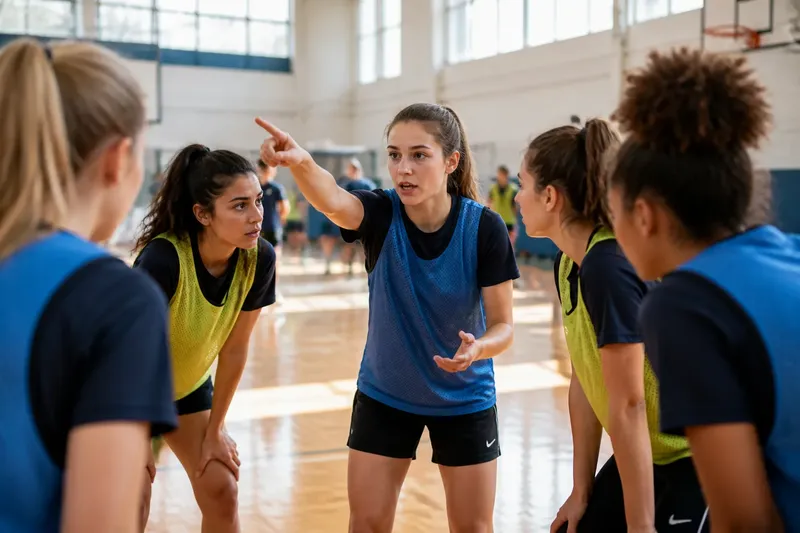
A first team tryout is easier to understand when you watch how players communicate, adapt to changing roles and make decisions together, rather than treating the score as a verdict. A drill’s result may be unclear, but the way the group responds can still be observed.
You do not need to rate every participant or guess who will be selected. Follow a few visible patterns instead. Team coordination is a little like a shared table: each person has a place, but the arrangement may change as the task changes.
What should you watch during a first team tryout?
Notice whether communication arrives in time to help
Listen for calls that give a teammate useful information before a decision becomes urgent: a name, a direction, a warning that space is closing, or a clear request for the ball. Then notice whether the receiver acknowledges it, changes position or makes another call. The point is not volume; a loud call that comes too late may be less useful than a quiet, precise one delivered early.
Communication can be verbal or visible. A player might point towards an open lane, look back to check a teammate’s position, or signal that they are ready to switch places. In a noisy gym or on a windy pitch, gestures may carry more meaning than speech. Observe whether teammates can read them without stopping the activity.
Follow what happens after a mistake
A missed pass or lost mark is only one moment. Watch what follows: does someone offer a simple cue, does the player recover into the next action, and does the group reorganise? A brief reset can tell you more about the team’s working habits than a visible display of frustration.
Keep separate what you saw from what you infer. “The player turned towards the next phase” is observable; “the player does not care” is a judgement about motive. An observer who sticks to actions is less likely to turn a single error into a story about someone’s character.
Track how players handle role changes
Tryouts often involve players moving into unfamiliar positions or taking turns in different units. Notice whether someone asks for the information they need, checks who is covering which area, and adjusts their movement when the arrangement changes. A role is not just a label; it includes responsibilities that teammates depend on.
Look at both the player changing roles and the people around them. Do others make space, offer a reminder or clarify who takes the next assignment? A smooth transition may be quiet, while a disrupted one may reflect unclear instructions rather than an individual’s inability.
Watch who makes room for a teammate to contribute
Shared play is not simply a matter of passing often. Notice whether players create an option for someone else: moving away from a congested area, offering support behind the ball, or leaving a clear route for a teammate to advance. In invasion games, that can open space; in volleyball, it may mean calling for coverage or yielding a ball to the better-positioned player.
Also watch what happens when a less prominent player becomes involved. Are they given time to make a decision, or does a teammate immediately take over? You are not judging personality from a brief exchange. You are noting whether the group’s actions give different players a workable chance to participate.
Notice how decisions are shared under pressure
When a drill becomes crowded or fast, players may need to choose between keeping possession, advancing, or resetting. Listen for short exchanges that help the group settle on an option. A player who changes their plan after a teammate’s call may be responding to information, not showing indecision.
Notice whether one person makes every call, whether responsibility shifts with the situation, or whether players appear unsure who should decide. Each pattern may have a different explanation: the drill could assign a leader, the coach may be testing a particular role, or the group may still be learning the task. Avoid judging a team’s decision-making without considering the instructions it was given.
Compare a player’s actions across more than one drill
A tryout can move from a technical exercise to a small-sided game, and the same player may look different in each. Instead of forming an opinion from a single highlight or stumble, note whether a behaviour appears again in another setting. Does the player keep checking their surroundings? Do they communicate when the team changes shape? Do they respond to feedback in the next attempt?
Repeated observations do not make you the selector. They simply help you avoid mistaking one awkward sequence for a consistent pattern. Some qualities are hard to see if a player receives little involvement, so record the opportunity as well as the action: a lack of touches may say as much about the drill or the group’s distribution as about the player.
Separate the drill’s demands from the player’s choices
Before interpreting a moment, work out what the activity asks players to do. A possession drill may reward quick support and safe passing, while a transition drill may require an immediate forward run. The same choice can be sensible in one task and out of place in another.
Watch for constraints such as a limited playing area, a required number of passes, or a coach assigning a particular starting position. These details shape what options are available. If the rule is not clear, it is better to leave the action uninterpreted than to assume the player ignored a responsibility.
Listen for useful feedback, not just the coach’s verdict
Coaching comments can explain what the group is being asked to improve. A cue such as “check your shoulder” or “hold the width” gives context for the next repetition. Notice whether players attempt to apply that cue, and whether teammates help each other remember it without turning every exchange into criticism.
Feedback is not a complete assessment of an individual. A coach may be correcting one detail because it matters to the current exercise, not because that detail defines the player. Treat the instruction as a clue about the task, then observe how the group responds.
Pay attention to how players reset between efforts
The pauses between drills can reveal whether players understand what comes next and how they prepare as a group. Someone may check the next position, collect equipment or confirm a rotation. Others may need a reminder. These small actions matter because they affect whether the team can begin the next task with shared expectations.
Do not confuse quietness with disengagement, or constant talk with leadership. A player might be concentrating, listening or waiting for a clear instruction. Look for concrete signs of readiness, such as taking the assigned place or checking a teammate’s role, rather than trying to read an internal state from expression alone.
Keep a short, neutral record of what you see
If you want to remember the session, write down actions rather than scores of approval. Brief notes such as “two players checked who covered the left side after the switch” or “the group needed a second instruction to rotate” preserve detail without turning observation into a ranking. Include the drill, because an action without context can be misleading later.
Say you are watching an invented tryout where a coach moves a midfielder into a defensive role. You note that the player asks who is covering the centre, receives a teammate’s answer, and then directs another player to take the open side during the next phase. The resulting note describes how communication and role adjustment unfolded in that drill; it does not predict selection.
Which questions help you interpret a tryout fairly?
Should the score matter at all?
The score can describe how a particular game or drill finished, but it cannot explain every contribution that led to it. Treat it as context, then look at communication, role fulfilment and decisions across the session.
What if I cannot hear the players?
Follow visible cues such as pointing, checking a teammate’s position, moving to offer support or changing shape after a signal. If the action is ambiguous, record what happened without assigning a motive.
How can I tell whether a player understood a role change?
Look for an observable response: asking for clarification, checking a covering teammate, moving into the new area or taking on the assigned responsibility in the next phase. One delayed adjustment alone may not reveal whether the instruction was heard or understood.
Should I compare players directly?
Only with care, since players may have different roles, opportunities and instructions. It is more useful to compare a player’s actions across comparable moments than to rank two people from a brief observation.
How can you leave with a useful impression?
Choose a small number of things to follow: communication, role changes and shared decisions are enough for a first observation. Notice when each appears, what the drill required and what the group did next. This keeps your attention on teamwork rather than on a single conspicuous moment.
A first team tryout is not always designed to reveal a complete picture of anyone. Your most useful impression may be a question to carry forward: did teammates have the information and space to act together? If you return to watch another session, that question gives you a steady point of comparison without pretending that one score or one day settles the answer.